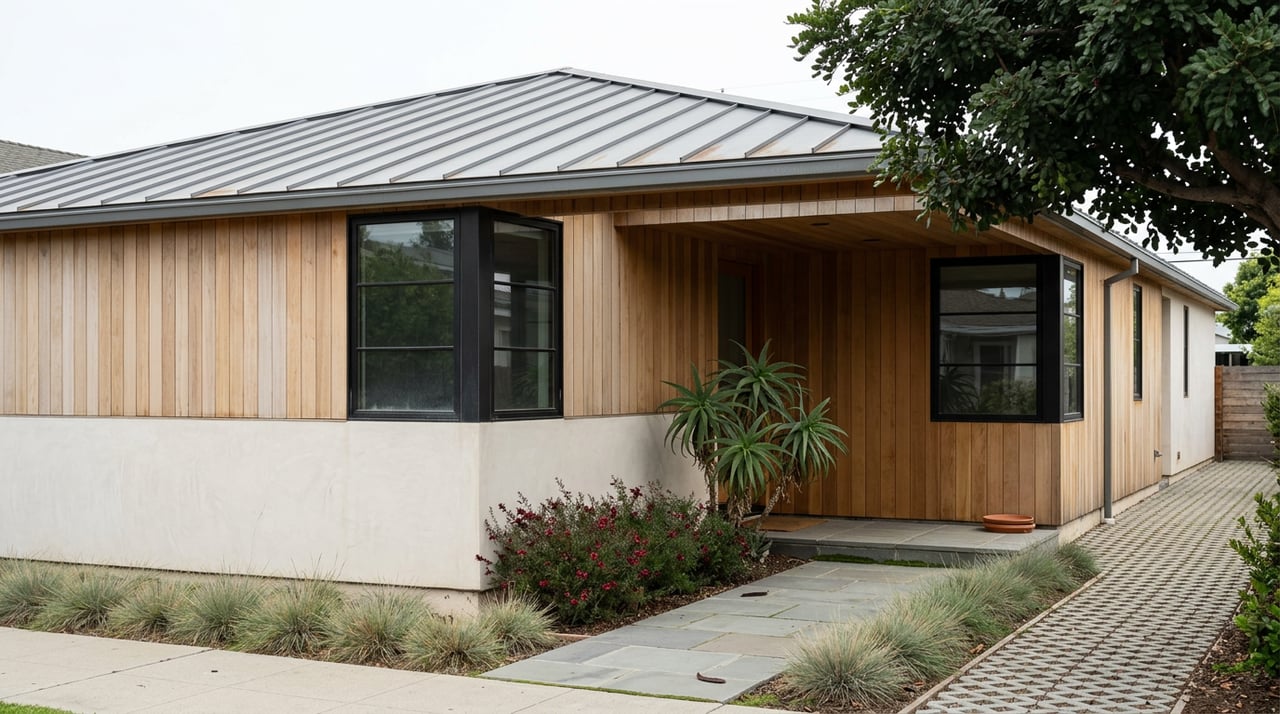
Ask around Encinitas how many vacation rentals the city allows and you'll usually hear a number in the 600s. Ask how many actually operate today and the number drops to around 443, according to the City of Encinitas. That gap isn't a rounding error or a stale spreadsheet. It's the whole story, and it matters if you're looking at a property here with rental income in the plan.
The larger number comes from an ordinance that the city has not finished passing. The Coast News reported that, on April 22, 2026, the Encinitas City Council voted 3-2 to reject a change the California Coastal Commission required as a condition of approval, and sent staff back to the drawing board instead of adopting it. Councilmember Luke Shaffer, Deputy Mayor Jim O'Hara, and Councilmember Marco San Antonio voted to hold out for a better deal. Councilmember Joy Lyndes and Mayor Bruce Ehlers voted to accept the state's terms and move on. The framework that would unlock hundreds of additional permits is still sitting in limbo, five years after the city's first community meeting on the issue in 2021.
If you're comparing Encinitas to a neighboring beach town and penciling in short-term rental income as part of the numbers, that limbo is the fact to price in before the comps.
What the higher cap actually promises, and why it isn't live
Encinitas adopted its current short-term rental framework in December 2022. It caps non-hosted rentals at 2.5 percent of housing citywide and 4 percent within the coastal zone west of Interstate 5, where most of the demand and most of the existing rentals already sit. The framework also includes a proposed 200-foot spacing requirement between any two non-hosted units.
The city sent that framework to the Coastal Commission for certification, and in February 2026 the commission approved it with one condition: swap the city's three-night minimum stay for a two-night minimum on non-hosted rentals. That single word change is what stalled everything. Certifying the higher caps and the spacing rule as part of the city's Local Coastal Program requires the city to also accept the two-night language. The council said no in April, which means the Local Coastal Program amendment remains uncertified. The Coast News reports that until it is certified, the higher numbers, 654 permits citywide and 376 west of the interstate, exist on paper and nowhere else.
What's operating today is the older, smaller system. The count the city and Coastal Commission staff were still citing this spring puts the total at roughly 443 permitted short-term rentals, with about 96 percent inside the Coastal Zone and nearly 80 percent west of I-5. That's the pool a buyer is actually competing for, not the expanded one that gets quoted in casual conversation and in some third-party permit guides that describe the rules as already "locked in."
The argument that's actually happening at City Hall
The public framing is a fight over one or two nights. The substance is bigger. Ehlers argued that locking in the spacing rule and the percentage caps now, while conceding the two-night point, would make any future negotiation with the state "much, much smaller," since the city would only need to revisit the stay minimum rather than renegotiate the whole package. Shaffer held the opposite position and pushed back on the idea that a longer minimum stay limits public access to the coast, pointing to free parking near the beach as evidence that access isn't the real constraint.
"I think we can make one heck of a good argument in the future when we come back to it that we could get a three-night stay."
As The Coast News reported, Ehlers said this while describing his own strategy for how the city might eventually reclaim the three-night minimum after accepting the state's terms elsewhere. It's a bet on future leverage, not a resolved policy. Ehlers also raised a separate concern in the same meeting, telling colleagues the city needs to find a way to limit corporate ownership of Encinitas properties, arguing it isn't helping short-term rentals, long-term rentals, or affordability. That's a preview of where this could go next: a primary-residence requirement similar to what Del Mar already adopted, which would change who can hold a permit at all, not just how many nights a guest has to book.
Why the spacing rule matters more than the percentage
The percentage cap gets the headline, but the proposed 200-foot buffer could affect permit eligibility in the neighborhoods buyers care most about if it takes effect. Encinitas concentrates its rental demand west of I-5, in blocks that are already built out. A buffer requirement would function differently in a dense coastal grid than it does on paper. Under that proposed rule, a property within 200 feet of an existing non-hosted rental could be disqualified, regardless of how much room is left under the citywide percentage.
There's one carve-out worth knowing by name. The Seabluffe community in northwest Encinitas is excluded from the citywide cap entirely, and 57 of its 255 units already operate as short-term rentals. That's a meaningfully different starting point for a buyer than a comparable property a few blocks away that could be affected if the proposed spacing rule takes effect.
How this looks next to Del Mar and Solana Beach
The same February 2026 Coastal Commission meeting that acted on Encinitas also approved a new ordinance for Del Mar, and the two cities ended up in very different places.
| City | Non-hosted cap | Minimum stay | Status as of August 2026 |
|---|---|---|---|
| Encinitas | ~443 permitted today; 654 citywide and 376 west of I-5 pending | 3 nights, unchanged after council rejected the state's 2-night requirement | Local Coastal Program amendment not certified |
| Del Mar | Area caps: 77 North Beach, 32 South Beach, and 19 Hills | Certified; Avalara reports the city set a March 2 to May 1, 2026 permitting window | |
| Solana Beach | 7 nights | Unaffected by this cycle |
Del Mar's ordinance also requires that a permit holder live in the property at least half the year, which effectively excludes pure investment rentals. Solana Beach's seven-night minimum stay narrows the guest pool to longer bookings rather than weekend traffic. None of these are interchangeable coastal towns for STR purposes even though they sit within a few miles of each other.
What this means if a rental income plan is part of your offer
Accessory dwelling units add another wrinkle. Encinitas prohibits short-term rentals in ADUs going forward, according to the City of Encinitas. A small number of existing ADU short-term rentals were allowed to continue when the ordinance was first adopted, but the city has been direct about the ceiling on that arrangement: once one of those permits expires, the short-term rental use is prohibited from that point on, with no path to renew it as an ADU rental. If a listing advertises ADU income as part of the pitch, that's a detail worth confirming before it factors into your offer.
Once a permit application does go in, expect a real review process rather than a rubber stamp. Applications go through Planning, Code Enforcement, and Finance concurrently, typically over about a two week cycle, followed by a site inspection from Code Enforcement. A failed review adds another cycle. None of that is unusual for a coastal city, but it's worth building into your timeline if the plan is to close and start hosting guests right away.
The short version
The 654 and 376 numbers are a ceiling the city hasn't built yet. The current baseline is the roughly 443 permits operating today and the three-night minimum the council just fought to keep. The 200-foot spacing rule is part of the pending Local Coastal Program amendment, not the current baseline. Encinitas has revisited this ordinance in 2021, 2022, and again in 2026, and the council's own framing suggests another round is coming once they decide how to trade the two-night concession for something else they want. Anyone underwriting a purchase around STR income here should treat the current rules as the plan, and the larger numbers as a possibility, not a guarantee.
Quick FAQ
Can I convert an ADU into a short-term rental in Encinitas? Not under new applications. Short-term rentals are prohibited in ADUs. A limited number of existing ADU rentals were grandfathered when the ordinance passed, but that use ends once the underlying permit lapses.
Is the 654-permit citywide cap in effect right now? No. It's part of a Local Coastal Program amendment the city council has not yet finalized, following its April 2026 rejection of the Coastal Commission's two-night minimum stay requirement.
How does Encinitas compare to Del Mar or Solana Beach for STR potential? Del Mar sets area caps of 77 in North Beach, 32 in South Beach, and 19 in the Hills, and requires the owner to live in the property at least half the year. Solana Beach requires a seven-night minimum stay. Encinitas has the least settled rulebook of the three right now.
If you're weighing a purchase in Encinitas with rental income in the mix, the permit landscape is moving faster than most listing descriptions account for. Fontaine Realty Group works with buyers and investors across North County San Diego and can walk through what a specific property's STR status actually looks like before you write an offer. Contact us to talk through the details.
This article is general information, not legal, tax or financial advice. Consult a qualified professional about your situation.