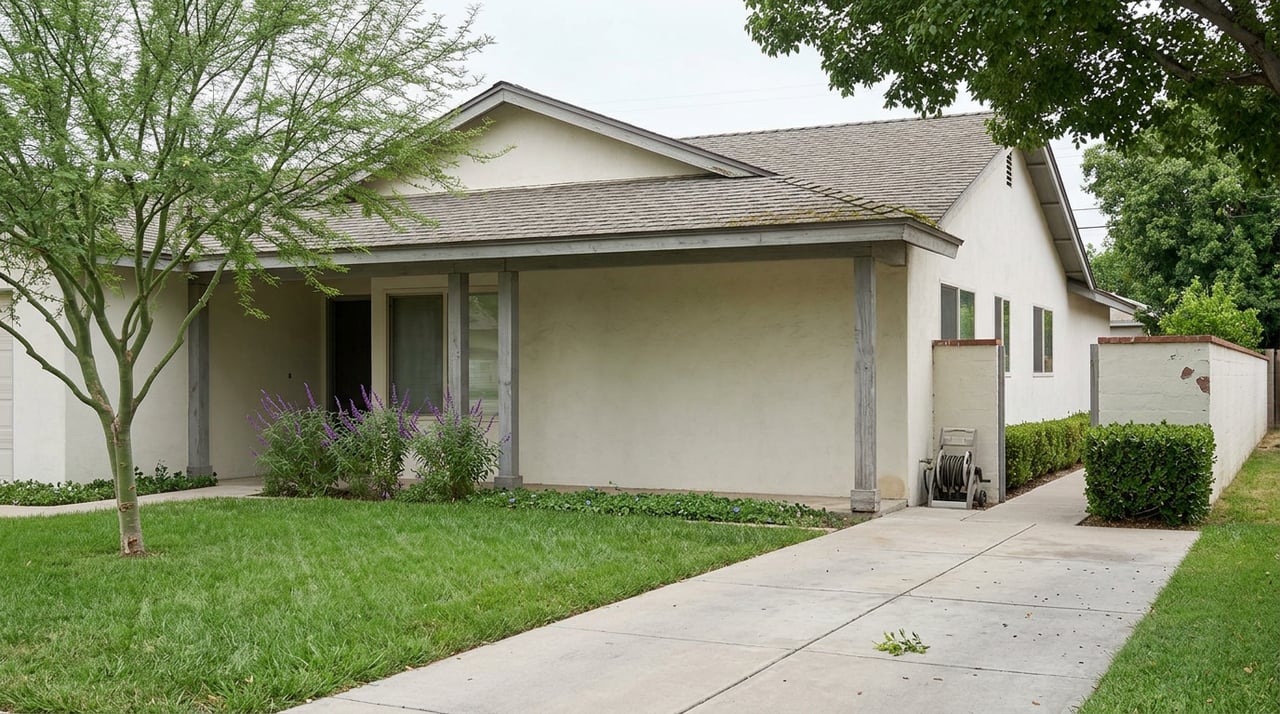
Before anyone signs a contract to convert a backyard unit into a sellable condominium, there is a signature required that has nothing to do with the city, the county, or the state legislature. It belongs to the lender. IL Total Design says every lienholder on the property must consent in writing before a condominium map can be recorded. That single requirement, buried in the fine print of San Diego's rollout of Assembly Bill 1033, is the part of this story that most coverage skips past on the way to the good news.
The good news is real. San Diego is one of a small number of California jurisdictions that now allow a homeowner to legally separate an accessory dwelling unit from the primary residence and sell it on its own, with its own deed and its own buyer. For a market where the median home price was hovering around $950,000 as of early 2026, that is a meaningful shift in what a residential lot can produce. But the ordinances that made it possible were written with enough guardrails that the headline and the reality diverge fast once you look at a specific property, a specific loan, and a specific zip code.
What actually changed, and when
The City of San Diego opted into AB 1033 first. The city's own ADU program page confirms the reform package, and the ordinance took effect August 22, 2025, outside the Coastal Zone. Unincorporated San Diego County followed roughly seven months later. On March 4, 2026, the Board of Supervisors voted unanimously to adopt its own version, with implementation beginning April 4, 2026, making the county, as Pacific Beach Builder reported, only the second in California, after San Francisco, to open this path for unincorporated land.
Supervisor Jim Desmond framed the vote around housing supply, arguing that ADUs already account for a large share of the county's new construction and that regulation should not stand in the way of ownership opportunities. That framing matters, because the Board did not simply adopt AB 1033 and move on. As SnapADU reports, the Board directed staff to return within 120 days, by roughly July 2, 2026, with additional policy options aimed at steering separate-sale ADUs toward homeownership rather than investment. On June 12, 2026, the Planning Commission took up those follow-up options, which include giving an existing tenant first right of refusal when an ADU sells and requiring owner-occupancy for certain separate-sale units. A Board hearing on that follow-up package is tentatively set for this month. The county's own zoning ordinance amendment page lays out that timeline in detail, and the direction of travel is toward more conditions, not fewer.
The Coastal Zone catch
Here is the detail that matters most to a reader who already lives near the water or is looking to buy there. As Inside San Diego reported, the same City of San Diego ordinance that authorized ADU condo conversions carved out an exception for the Coastal Zone, where implementation requires certification from the California Coastal Commission. That certification was expected sometime in 2026, and nothing in the public record we reviewed shows the Coastal Commission has signed off yet. A property in a coastal community inside city limits can sit in a strange gap: legally in a jurisdiction that adopted the ordinance, but not necessarily cleared to use it, because the agency with final say over coastal land has not weighed in.
That gap does not show up in most of what gets written about this law, because most of what gets written about this law is aimed at builders and investors working inland, in neighborhoods like Clairemont or North Park, where ADU permit volume has been highest. For a brokerage built around North County coastal properties, it is the first question worth asking, not the last.
A jurisdiction-by-jurisdiction lottery
AB 1033 itself does nothing on its own. It gives cities and counties the option to allow separate ADU sales, and each one has to write and adopt its own ordinance to use that option. San Jose adopted it in 2024. Santa Monica adopted it in early 2025. The City of San Diego and unincorporated San Diego County have adopted it, on the timelines above.
The three gatekeepers between you and a sale
Assuming a property clears the jurisdiction question, the process of actually converting an ADU into a separately sellable unit still runs through several checkpoints that determine whether it is worth attempting:
- Lender consent. It is the first checkpoint in the conversion process.
- Separate utility metering. Water, sewer, gas, and electric each need independent connections for the ADU and the primary home. Most existing ADUs share service with the main house, so retrofitting separate metering after the fact typically means trenching and panel work that can run into five figures.
- Subdivision and title work. The conversion follows the Subdivision Map Act and the Davis-Stirling Common Interest Development Act, the same framework that governs any small condominium project. The county's guidance document for separate ADU sales lists a tentative parcel map, a condominium plan from a licensed surveyor, written lienholder consent, and recorded CC&Rs among the required filings, and notes that the plan will not record until the ADU passes a final inspection and receives a certificate of occupancy.
As of 2026, the City of San Diego charges roughly $20,000 in fees for condominium map processing alone, separate from private survey and engineering work that commonly runs another $20,000 to $25,000. Add utility separation costs and the total price of conversion, before the unit is ever listed, lands well into five figures. The county's own estimate for a full conversion in unincorporated areas is two to three years from start to finish.
When the math actually works
None of this means separate sale is a bad option. It means it is a specific option, suited to a specific set of situations rather than a default upgrade for anyone who builds an ADU. It tends to make the most sense for a family that built a unit for an aging parent and wants a clean way to eventually sell it rather than let it sit vacant, for an investor who wants a defined exit rather than an indefinite rental hold, or for an empty-nester weighing whether to downsize into the smaller unit and sell the larger one, or the reverse.
Federal Housing Finance Agency data from 2023 found California homes with an ADU carried a median appraised value of $1,064,000, compared with $715,000 for homes without one, a difference of roughly $349,000. That gap reflects added value from having a second unit on the lot at all, through rent or flexibility, not the incremental value of the separate-sale option specifically. Layering a $50,000-plus conversion cost and a multi-year timeline on top of that only pencils out if the resale value of the standalone unit clearly exceeds what the same square footage would earn as a long-term rental, or if the goal is ownership clarity for a family situation rather than pure return.
What this means if you are building now
If you are planning an ADU in a jurisdiction that has already opted in, and outside the Coastal Zone, it is worth talking to your lender before you finalize plans, since their consent is the step most likely to stall a future conversion. If you are in a North County city that has not adopted an ordinance, building with separate utility runs and a layout that could support future subdivision costs less at the framing stage than it does as a retrofit, even if the sale option is not available where you live today. Rules are still being written at the county level, and cities that have not acted yet may act during the year or more it takes to design and build an ADU anyway.
Junior ADUs do not qualify for any of this. State law requires a JADU to remain part of the primary residence, so if a separate sale is part of the long-term plan, the unit has to be a full ADU from the start.
If you are weighing an ADU project in Carlsbad, Encinitas, or anywhere else in North County, and want a clear read on what your specific lot, loan, and timeline actually support, Fontaine Realty Group has spent two decades helping owners in this market think through acquisition, renovation, and long-term property strategy before the first permit gets filed. Contact us to talk through what makes sense for your property.
This article is general information, not legal, tax or financial advice. Consult a qualified professional about your situation.